

Guard Your Altar
When Vultures Circle

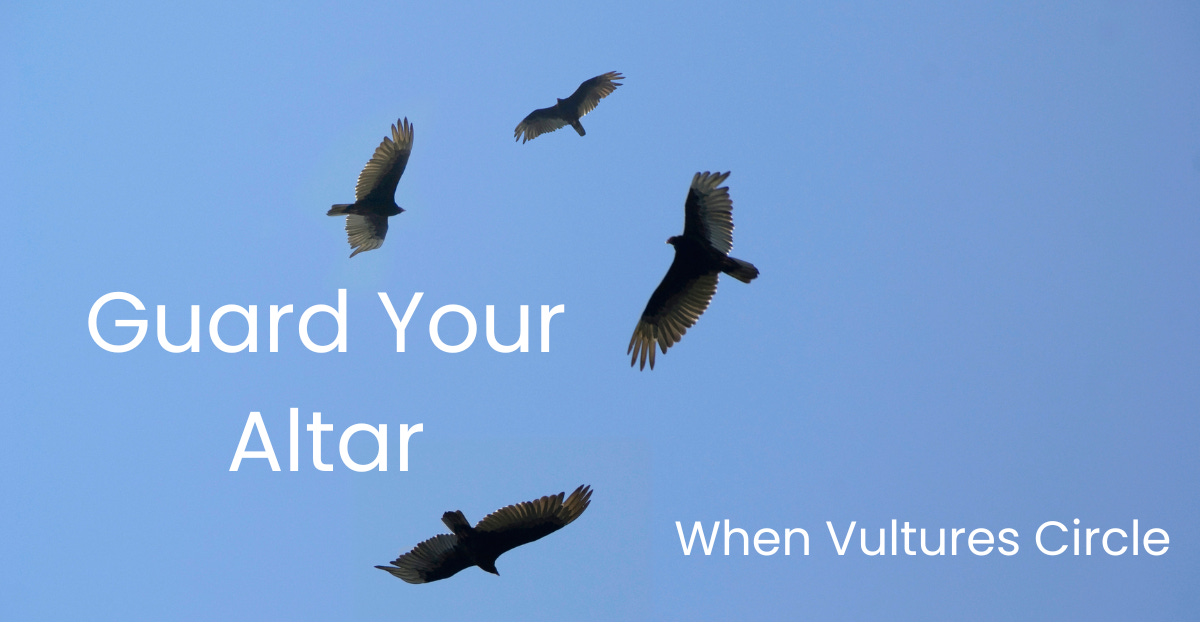
A common sight in Africa, vultures are often seen circling the skies in search of their next meal. Opportunistic carnivores, they prefer not to hunt if they don’t have to. When lions bring down a kill, vultures quickly gather, signaling to one another that lunch is served.
Large and intimidating, they protest loudly when challenged. But when firmly confronted, they retreat—only to circle back later and try again.
Lions eat until they can barely move because hunting is costly. For every successful kill, there are several failed attempts. The chase drains them. Once they have eaten, the last thing they want to do is expend more energy chasing scavengers.
But if they don’t, there will be nothing left when hunger returns.
Vultures don’t announce their arrival. They often search alone. Once one spots a carcass, it begins to circle, signaling others to join. At first, only a few land cautiously. Once the first bites are taken, the rest descend swiftly. Their work is urgent. Other scavengers may be nearby, and the ones who made the kill could return at any moment. There isn’t much time, so they eat quickly before being chased away.
Vultures and altars
Vultures interrupted Abram in the middle of a covenant with God. They still do, whenever something sacred is laid on the altar.
God had called Abram to leave everything familiar and walk toward an unknown future. He obeyed. In Genesis 15, God confirmed His covenant with him. Abram prepared the sacrifices and laid them on the altar.
And then the vultures came.
All night long, Abram guarded what he had offered to God. He chased the birds away so they would not consume the sacrifice. That night, as Abram stood watch, God reaffirmed His promise. The fulfillment would not come immediately, but the guarding of the altar marked a defining moment in his journey of faith.
There have been many times I’ve had to chase vultures away from my own altar.
At first, I might have called it stubbornness. In my lifetime of walking with Jesus, that stubborn streak kept me standing when discouragement pressed in. But over time, I began to understand something deeper. It isn’t about stubbornness. It’s about recognizing how important it is to protect what has been laid before God.
Blessing often begins at the altar of sacrifice.
There’s a cost to guarding the altar
Serving God sacrificially runs counter to natural logic. Our instinct tells us to secure ourselves, to protect our resources, to plan for every possible outcome. But God holds the unknown. When we lay something down in obedience, we must also be willing to guard it.
The vultures of discouragement, weariness, financial strain, and loneliness are familiar to me. They circle quietly at first. One thought. One doubt. One weary sigh. Staying encouraged when everything around you whispers, “Give up,” takes effort.
There is a cost to guarding the altar.
I am not someone who easily gives voice to my internal struggles. I tend to assume everyone else is already carrying enough. Why add my weight to theirs? As an Enneagram 2, helping comes naturally. Admitting weakness does not.
But I paid for that pride.
Unless I chased that vulture away, it would signal the others to return. Isolation invites discouragement. Pride feeds weariness. Silence strengthens doubt. When I finally laid my pride down and connected honestly with God and with others, the circling began to thin. The vultures lost their landing place.
The promise and the altar
Vultures are persistent creatures. They may retreat, but they are always watching for another opportunity. Abram, later Abraham, saw God do extraordinary things. But the vigilance did not end in Genesis 15. The promise required ongoing trust. The altar required ongoing guarding.
The same is true for us.
The vultures will circle. They are patient. They are opportunistic. They wait for exhaustion, distraction, or discouragement to create an opening.
The question is not whether they will come.
The question is whether we will stand and guard the altar.
Guarding the altar takes effort, and so does sharing these stories. If you’d like to support this work, buying me a coffee is always appreciated.